| New conference paper published in the book Computational Intelligence | 1 February 2026 |
|
In our conference paper “Optimization is not enough: Why problem formulation deserves equal attention”, we study the topology and material anisotropy optimization of a cantilever beam. We use moving morphable components and the lamination parameter interpolation method to parametrize the geometry and fiber angles, respectively. We investigate the interplay between problem formulation and algorithmic choices. Particularly, we demonstrate how sequential or concurrent optimization of topology and anisotropy variables, along with computational budget allocation, affects the quality of the final design. |
|
| New article published in Computer Methods in Applied Mechanics and Engineering! | 26 May 2025 |
|
How can we efficiently design variable-stiffness fiber composites with clear topological boundaries and smooth fiber paths? In our new paper, we tackle this problem by proposing a novel approach that relies on integrating discrete-variable anisotropic topology optimization with lamination parameter interpolation-based stiffness tailoring. |
|
| We presented at ECCOMAS – AeroBest 2025 in Lisbon | 25 April 2025 |
|
✈️ ECCOMAS – AeroBest 2025 conference in Lisbon has been fun and interesting. I was honored to get things started by chairing the first technical session, and my PhD student Shuya Nozawa nicely presented our work on combined topology and fiber path optimization of composite structures (the paper will soon be accessible within the conference proceedings). I thank all organizers and attendees for their contributions to the event. Until next time!
|
|

| Our review paper about topology and fiber path optimization of composites has been published in Materials & Design! | 18 February 2025 |
|
Together with my PhD student Shuya Nozawa, we published a review article entitled ‘Topology and ber path optimization of composite structures: A critical review’ in Materials & Design. In our work, we summarize the state-of-the-art composite design techniques developed to optimize fiber paths and structural topology sequentially or simultaneously. The available approaches are categorized according to their scope and intrinsic principles unlike many existing works employing classification based on optimization or material parametrization schemes. Our paper also covers experimental results as another rare feature. The advantages and shortcomings of the investigated methods are discussed considering various aspects including effectiveness, ease of use, computational cost, versatility, robustness, and suitability for manufacturing. The review concludes with remarks on relevant open problems and potential future research directions.
|
|

| ISMA 2024 has been a blast! | 11 September 2024 |
|
ISMA2024 conference has been a huge success with more than 700 participants! We were also pleased to welcome many attendees who wanted learn more about our research at the KU Leuven – Mecha(tro)nic System Dynamics (LMSD) booth. With my fellow organizers, we hope to see everyone again at ISMA2026!
|
|

| Our project ‘Smart Multifunctional Composite Metamaterials’ is funded by the US Airforce! | 4 September 2024 |
|
I am pleased to share that our research proposal on ‘Smart Multifunctional Composite Metamaterials” received funding from the United States Airforce. This project is a collaboration between Koc University, KU Leuven, and the University of Stuttgart. Stay tuned for the upcoming PhD study vacancies and other updates! |
|
| Spoke at a Dagstuhl Seminar | 12 July 2024 |
|
I left an amazing week behind at the Dagstuhl Seminar on “Automated Machine Learning for Computational Mechanics”. It was an extremely stimulating event that brought together a diverse group of experts as well as junior researchers from both fields. I also got the chance to deliver a talk on “Boosting solid mechanics simulations with deep learning for computational cost reduction and stability improvement”. Many thanks to all attendees and especially the amazing organizers!
|
|

| Participated in the ECCM21 | 5 July 2024 |
|
Attending the 21st European Conference on Composite Materials (ECCM21) in Nantes last week was fantastic! It is always great to see lots of different perspectives and meet so many faces. Our collaborative work on “Design and fabrication of variable stiffness composite laminates with enhanced dynamic behavior” was also presented. The conference proceedings can be accessed via the following link: https://lnkd.in/grCpR7Y4
|
|

| Presented at the ECCOMAS 2024 | 7 June 2024 |
|
The ECCOMAS2024 was amazing! It was surely one of the best conferences I have attended, and I appreciate everyone’s contributions in making this stimulating event happen. I also got the opportunity to present my work on “Laminate-like functionally graded materials”. I was very happy with the reactions and discussions that followed.
|
|

| A new paper about the human fingertip’s dynamic response is up! | 3 May 2024 |
|
Our paper entitled ‘Fingertip dynamic response simulated across excitation points and frequencies’ has been published in Biomechanics and Modeling in Mechanobiology. In our paper, we simulate the deformation profiles and amplitudes caused by harmonic forces applied in the normal direction at four locations: the center of the finger pad, the side of the finger, the tip of the finger, and the oblique midpoint of these three sites. The results give novel insights into the combined influence of excitation location and frequency on the fingertip dynamic response, potentially facilitating the design of future vibration feedback devices.
|
|

| Attended the ‘Workshop on Computational and Mathematical Methods in Data Science’ at TU Delft | 25 April 2024 |
|
I attended the ‘Workshop on Computational and Mathematical Methods in Data Science’, which took place at TU Delft. The event included many presentations about fusing physics-based and data-driven approaches to solve engineering problems. This field has been continuously gaining interest over the recent years, and I am sure that it will continue to grow in the upcoming years.
|
|

| Visited the Flemish Aviation Training Centre in Oostende | 10 November 2023 |
|
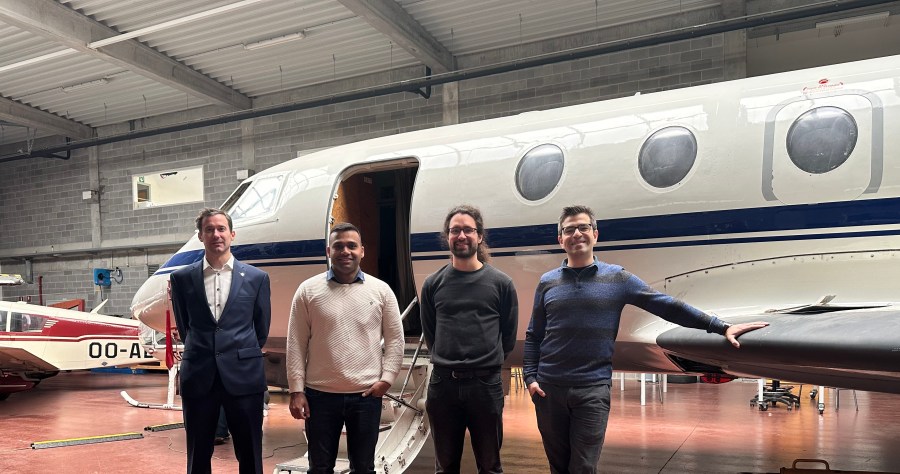
As three Mechanical Engineering professors and a postdoc working at KU Leuven – Bruges Campus, we had a pleasant visit to the Flemish Aviation Training Centre in Oostende. It was great fun to check out many real airplanes and helicopters. We also had a chance to visit different laboratories reserved for composites, vibrations, and propulsion systems.
|
|
| A new article on variable stiffness laminate design is out! | 15 October 2023 |
|
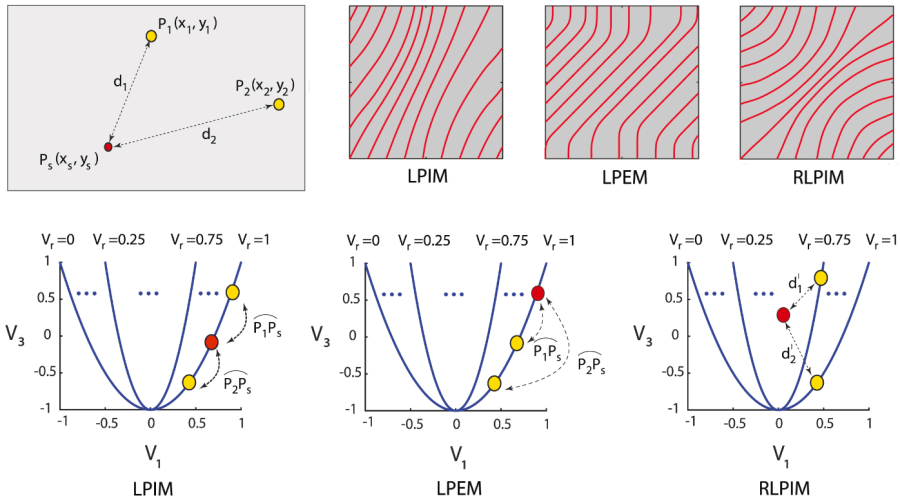
The design of variable stiffness laminates requires efficient methodologies due to the increased number of optimization variables associated with curvilinear fiber paths. We addressed this need in our article “Advanced lamination parameter interpolation and extrapolation methods for designing manufacturable variable stiffness laminates” published in Composite Structures. We developed two novel approaches: the lamination parameter extrapolation method (LPEM) and the relaxed lamination parameter interpolation method (RLPIM). These techniques build on the previously proposed lamination parameter interpolation method (LPIM), and collectively they form a spectrum of approaches that differ in optimization capacity, conservativeness regarding fiber curvature constraints, and computational cost.
|
|
| Had the pleasure to host a great guest seminar about laser Doppler vibrometry in my vibration course | 26 September 2023 |
|
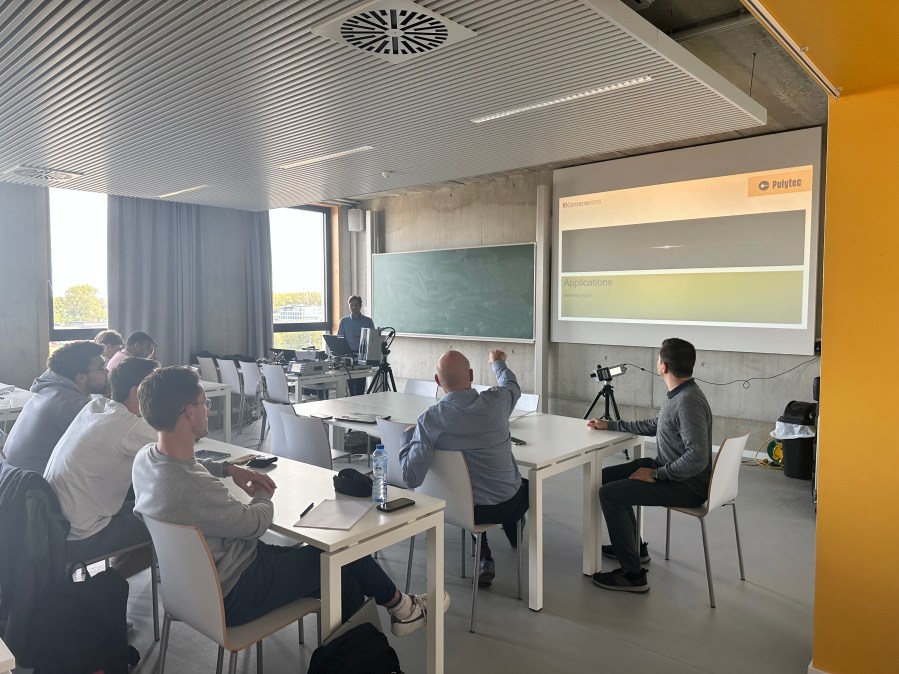
It was a pleasure to host Kris Peeraer and Olivier de Moor from KonneXXions, a leading distributor of laser Doppler vibrometers (LDVs) in the Benelux area. We welcomed our guests at Campus Bruges, where they delivered a seminar about LDV technology as a guest lecture in the ‘Dynamic Behavior of Machines’ course that I am teaching. We had the opportunity to learn about the latest developments in the field as well as very interesting applications. The presentation was followed by a demo, where full-field measurements were taken on a complex mechanical component to observe its vibration modes. |
|
| Received a personal research grant from the Science Hub initiative jointly funded by Amazon and Max Planck Society! | 01 September 2023 |
|
I am thrilled to announce that I received a personal research grant from the Science Hub initiative jointly funded by two giants, Amazon and Max Planck Society. Thanks to this funding opportunity, a research engineer can be hired to work at the Max Planck Institute for Intelligent Systems. Together, we will explore the possibility of using deep learning and computational simulations to estimate clothing comfort. |
|

| Attended World Haptics Conference 2023 in Delft, Netherlands | 10 July 2023 |
|
I attended World Haptics Conference 2023, which took place at TU Delft this year. This event is one of my favorites as it always creates occasions for stimulating discussions and reveals opportunities for computational mechanics research in the haptics field. In the picture, my wife Dr. Yasemin Vardar is presenting our collaborative work, which was also flattering to see. |
|

| Had great time at the graduation ceremony of the KU Leuven – Bruges Campus | 06 July 2023 |
|
As KU Leuven – Bruges Campus, we have the privilege to celebrate the graduation of our students at Bruges City Hall every year. This year’s event was another great one, where the students, professors, and teaching staff shared this special night and enjoyed the ceremony. Seeing our students being successful is one of the most fulfilling moments for us professors. Wishing all the graduates a great career ahead! |
|

| Visited Tempe Campus of the Arizona State University | 23 June 2023 |
|
I had the opportunity to visit Tempe Campus of the Arizona State University for the first time. Many thanks to Prof. Aditi Chattopadhyay and her team for guiding me around in their labs and explaining their great work! |
|

| Delivered a presentation at the SSDM 2023 Conference held in San Diego! | 19 June 2023 |
|
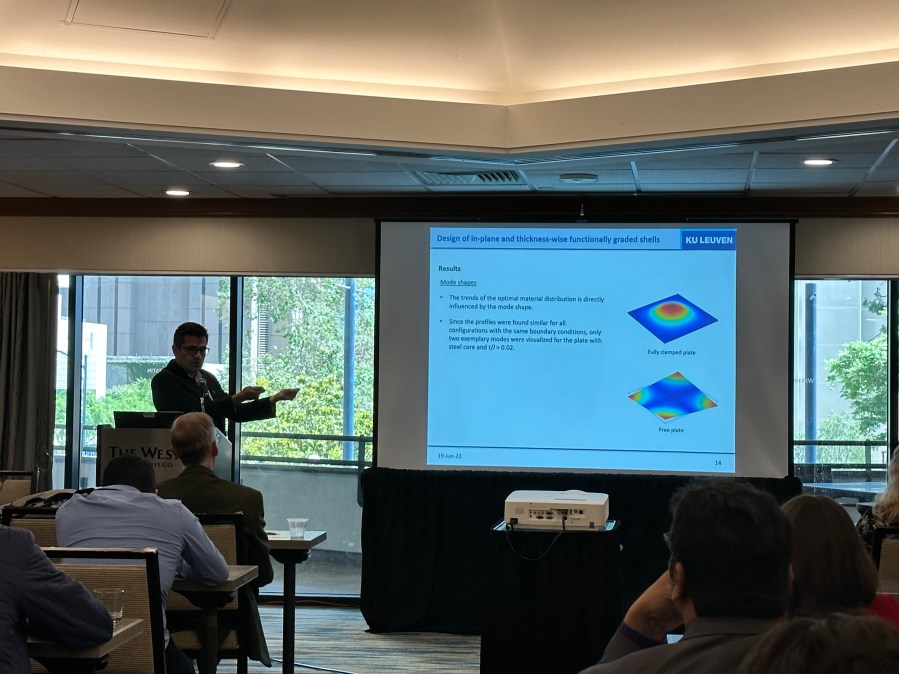
I was among the speakers at the ASME Aerospace Structures, Structural Dynamics, and Materials Conference held in San Diego. I presented my paper “Design of in-plane and thickness-wise functionally graded shells”. Many thanks to the reviewers, attendees, and organizers for making this great event possible! |
|
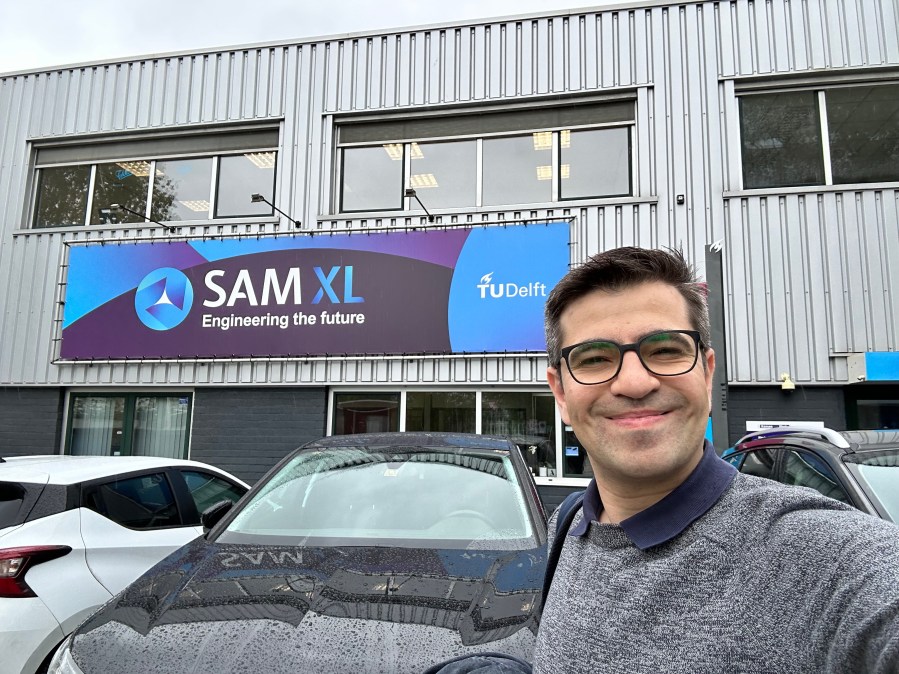
| Attended SAMPE Benelux spring meeting at SAM-XL in TU Delft Campus | 09 May 2023 |
|
I attended the SAMPE BeNeLux spring meeting with the theme ‘Automation of Composite Manufacturing Processes’. There were many great presentations, and it was nice to see some KU Leuven researchers winning awards at the event. |
|
| Our article “Eigenfrequency optimization of variable stiffness manufacturable laminates using spectral Chebyshev approach and lamination parameters” has recently been published in Mechanics of Advanced Materials and Structures! | 23 February 2023 |
|
In this study, we integrated the manufacturability constraints related to the maximum fiber curvature into our meshless modeling approach developed for variable-stiffness laminates. We used the developed framework to maximize the fundamental frequency of plates. The variable-stiffness designs provided significantly higher frequencies compared to optimum constant-stiffness laminates, although the actual level of improvement depends on the number of layers. Finally, we obtained manufacturable fiber paths considering the allowed fiber curvature, which can also reduce the frequency values. |
|

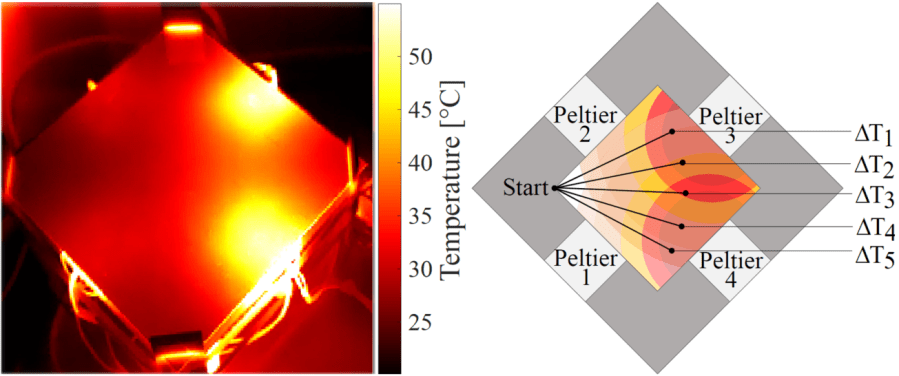
| Our paper ‘ThermoSurf: Thermal display technology for dynamic and multi-finger interactions’ has been published in IEEE Access! | 1 January 2023 |
|
Thermal feedback has been proven to enhance user experience in human-machine interactions. Yet state-of-the-art thermal technology has focused on the single finger or palm in static contact, overlooking dynamic and multi-finger interactions. The underlying challenges include incompatible designs of conventional interfaces for providing salient thermal stimuli for such interactions and, thereby, a lack of knowledge on human thermal perception for relevant conditions. In this paper, we present the ThermoSurf, a new thermal display technology that can deliver temperature patterns on a large interface suitable for dynamic and multi-finger interactions. We also investigate how user exploration affects the perception of the generated temperature distributions. Twenty-three human participants interacted with the device following three exploration conditions: static-single finger, dynamic-single finger, and static-multi finger. In these experiments, the individuals evaluated 15 temperature differences ranging from -7.5 °C to +1.5 °C with an initial temperature of 38 °C. Our results showed that human sensitivity against thermal stimuli is significantly greater for static-single finger contact compared to the other tested conditions. In addition, this interaction type resulted in higher thermal discrimination thresholds than the ones reported in the literature. Our findings offer new perspectives on providing salient and consistent thermal feedback for future tactile interfaces. |
|
| New year started with a new paper in Soft Robotics! | 1 January 2023 |
|
In this paper, we introduced a lightweight wearable silicone finger sheath that can deliver salient and rich vibrotactile cues using electromagnetic actuation. We fabricated the sheath on a ferromagnetic mandrel with a process based on dip molding, a robust fabrication method that is rarely used in soft robotics but is suitable for commercial production. A miniature rare-earth magnet embedded within the silicone layers at the center of the finger pad was driven to vibrate by the application of alternating current to a nearby air-coil. We experimentally determined the amplitude of the magnetic force and the frequency response function for the displacement amplitude of the magnet perpendicular to the skin. In addition, high-fidelity finite element analyses of the finger wearing the device were performed to investigate the trends observed in the measurements. Moreover, we conducted a psychophysical study to find the detection thresholds at different frequencies. Finally, a cue identification experiment and a demonstration in virtual reality validated the feasibility of this approach to fingertip haptics. |
|

| Delivered a “Break the Borders” talk! | 25 November 2022 |
|
I was honored to be invited by Composite Materials Group of KU Leuven to present at the “Break the Borders” event. Link to the event page |
|
| Joined KU Leuven as Assistant Professor! | 1 October 2022 |
|
With great pleasure, I would like to announce that I have joined the Department of Mechanical Engineering at KU Leuven as Assistant Professor. I am located at the Bruges Campus, and I am affiliated with both Mecha(tro)nic Systems Dynamics Group and M-Group. I am honored to be a faculty member of such a prestigious university with a centuries-long history.
|
|
| Attended the International Conference on Noise and Vibration Engineering | 19 September 2022 |
|
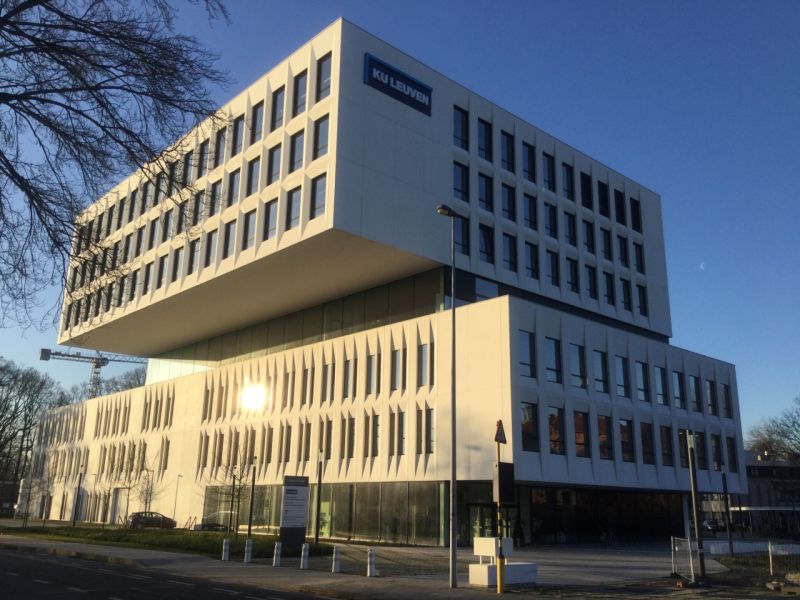
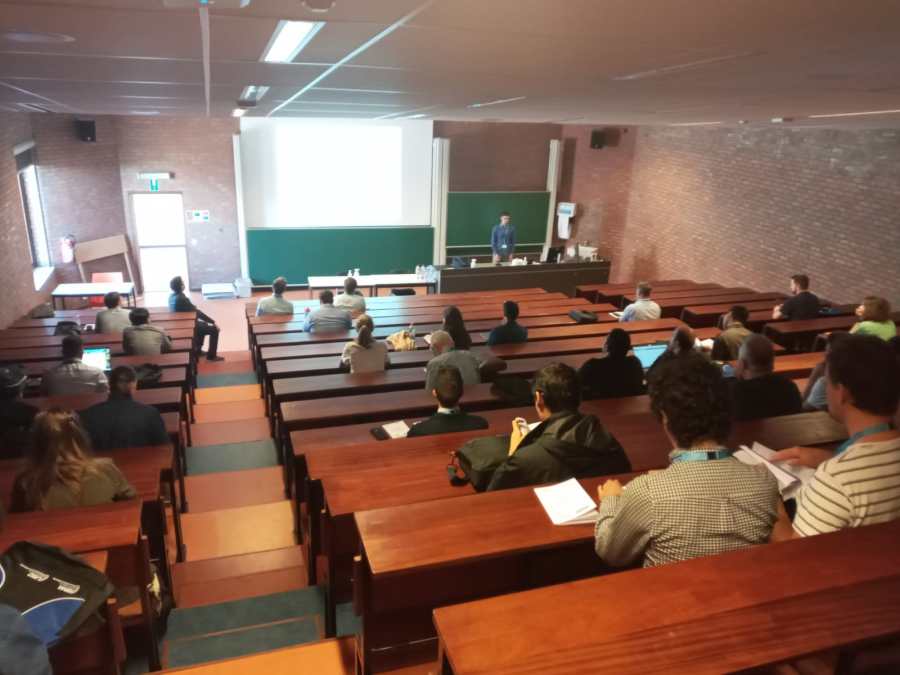
I was delighted to attend the International Conference on Noise and Vibration Engineering (ISMA2022) held in Leuven, Belgium on 12-14 September. With this third one, I conclude my summer conferences for this year. Besides enjoying excellent presentations, I had the chance to have many interesting discussions with leading researchers in the field. This event was also a very timely opportunity for me to meet my new colleagues from LMSD at KU Leuven! Here is a moment from the “Substructuring and coupling” session that I chaired.
|
|
| Back at on-site conferences with the International Conference of Nonlinear Solid Mechanics! | 1 July 2022 |
|
It was a great pleasure to participate in the International Conference of Nonlinear solid Mechanics, which took place in Alghero, Italy on 13-16 June. I presented a part of our research on using machine learning as a model reduction technique for contact analysis using finite elements. There were amazing plenary talks, technical sessions, and poster presentations. Still, the best part was engaging in interesting discussions with the top solids mechanics researchers around the world. I have to mention the mood-boosting effect of beautiful Alghero as well!
|
|

| More carbon fiber or more glass fiber? See our new Composite Structures article! | 1 June 2022 |
|
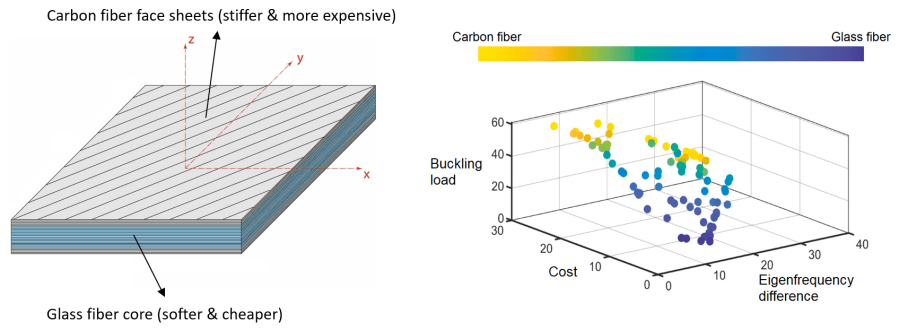
In the design of sandwich laminates, increasing the proportion of carbon fiber can increase both stiffness and cost, while using more glass fiber has the opposite effect. Thus, in the multi-objective design of these structures, eigenfrequency gaps, buckling load, and cost metrics can be in conflict. This discrepancy requires finding the laminate configuration with the best trade-off. In our study, we addressed this problem using lamination parameters, the spectral Chebyshev method, and genetic algorithms. We determined 2D and 3D Pareto-optimal solutions that correspond to the binary and ternary combinations of the mentioned objectives. The results provide insights into the design requirements for improving the dynamic and load-carrying behavior of sandwich laminates while minimizing the cost.
|
|
| Delivered a talk at Sorbonne University in Paris | 11 May 2022 |
|
I had the pleasure of visiting Sorbonne University to deliver a talk about the design of nonconventional composite structures using lamination parameters. In my talk, I highlighted the advantages and limitations of lamination parameters, summarized my doctoral and postdoctoral studies on this topic, and outlined the major remaining challenges and potential future directions. The presentation was followed by great discussions!
|
|

| Let’s cook by mixing simulated and measured data! | 15 April 2022 |
|
Mixing data from experiments and simulation can be a good recipe in many machine learning applications. We used this approach to develop large-scale tactile sensors in our recent article published in IEEE Transactions on Automation Science and Engineering. In the paper, we introduced a hybrid method that combines simulation data synthesized from an electromechanical finite element model with real measurements collected from a new ERT-based tactile sensor. Our modular pipeline’s results outperform predictions by both a physics-based model and end-to-end learning.
|
|
| How to optimize the fiber layup of filament wound structural members efficiently? | 01 April 2022 |
|
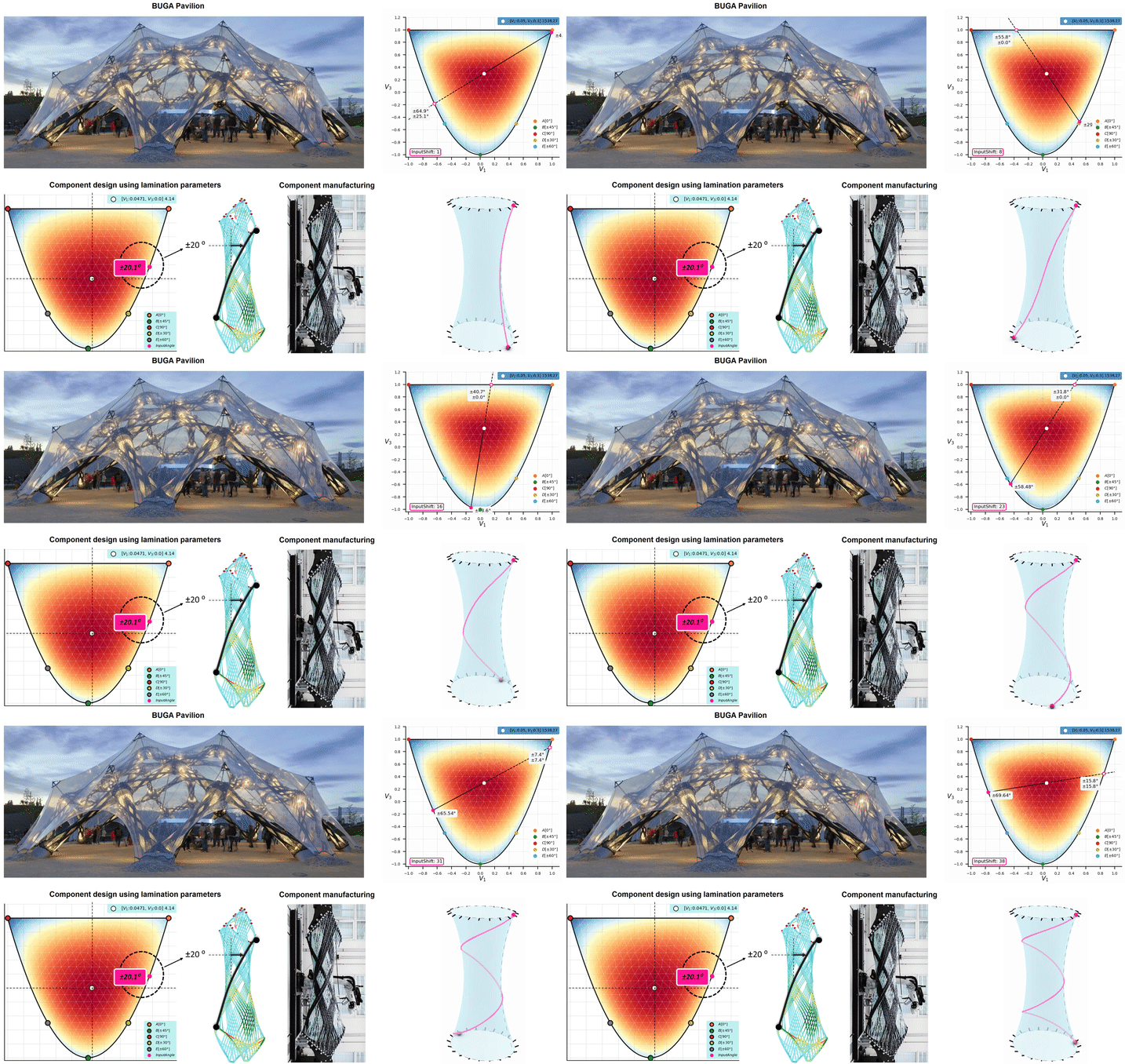
In collaboration with the researchers from the University of Stuttgart, we addressed this problem in our recent Structures article “A design methodology for fiber layup optimization of filament wound structural components”. In this study, we introduced a novel technique that integrates lamination parameters into the design of filament wound structures. The case studies demonstrated the effectiveness of our approach and the applicability of continuous shell models to analyze structures with internal gaps.
|
|
| How do our fingertips vibrate? DigiTip can answer! | 01 July 2021 |
|
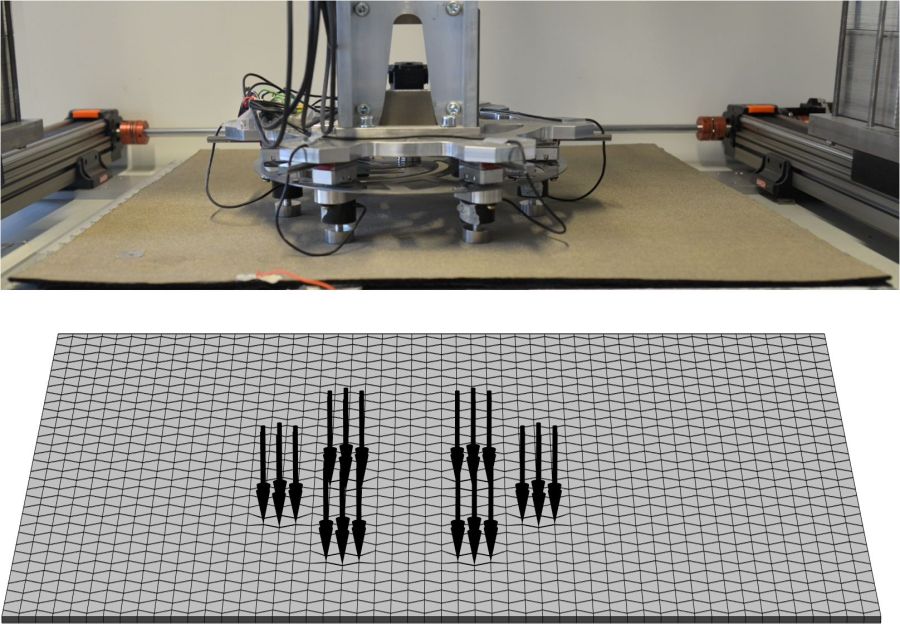
Our article “Free and Forced Vibration Modes of the Human Fingertip” has recently been published in Applied Sciences. In this study, we developed DigiTip, a detailed three-dimensional finite element model of a representative human fingertip that is based on prior anatomical and biomechanical studies. Using this model, we first performed modal analyses to determine the free vibration modes with associated frequencies up to about 250 Hz. Subsequently, we applied distributed harmonic forces at the fingerprint centroid in three principal directions to predict forced vibration responses through frequency-response analyses. The results illuminate the dynamic behavior of the human fingertip in haptic interactions involving oscillating stimuli, such as textures and vibratory alerts, and they show how the modal information can predict the forced vibration responses of the soft tissue.
|
|

| Another journal article published in Materials | 15 June 2021 |
|
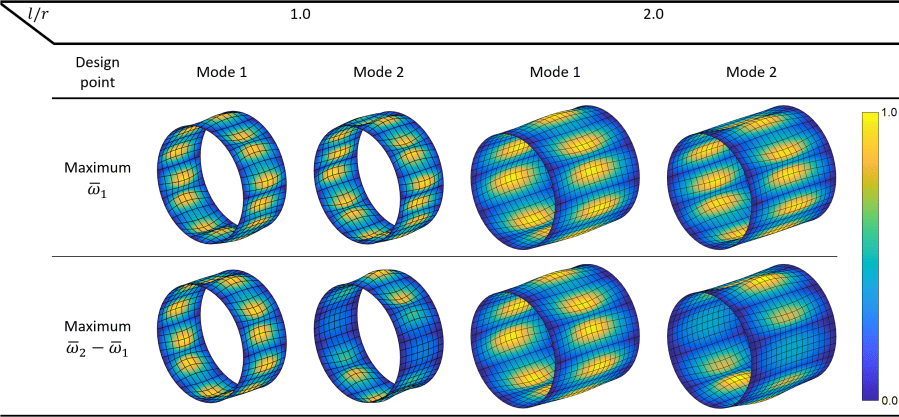
My article “Design of circular composite cylinders for optimal natural frequencies” has recently been published in Materials. This study concerns optimizing the eigenfrequencies of circular composite cylinders using lamination parameters. In the lamination parameter plane, novel response contours are obtained for the first and second natural frequencies as well as their difference. The lamination parameters yielding the maximum response values are determined, and the first two mode shapes are shown for the optimum points. The results demonstrate that the maximum fundamental frequency points of the laminated cylinders mostly lie at the inner lamination parameter domain, unlike the singly curved composite panels. In addition, the second eigenfrequency shows a nonconvex response surface containing multiple local maxima for several cases. Moreover, the frequency difference contours appear as highly irregular, which is unconventional for free vibration responses.
|
|
| Let’s make things COMPACT! | 05 June 2021 |
|
My article “COMPACT: Concurrent or Ordered Matrix-based Packing Arrangement Computation Technique” has been published in Applied Sciences. The method presented in this study allows the objects to be rotated by arbitrary angles, unlike the right-angled rotation restrictions imposed in many existing packing optimization studies based on raster methods. The raster approximations are obtained through loop-free operations that improve efficiency. Additionally, a novel performance metric is introduced, which favors efficient filling of the available space by maximizing the overall contact within the domain. Moreover, the objective functions are exploited to discard the overlap and overflow constraints and enable the use of unconstrained optimization methods. The results of the case studies demonstrate the effectiveness of the proposed technique.
|
|

| New journal article has been published in Materials | 15 May 2021 |
|
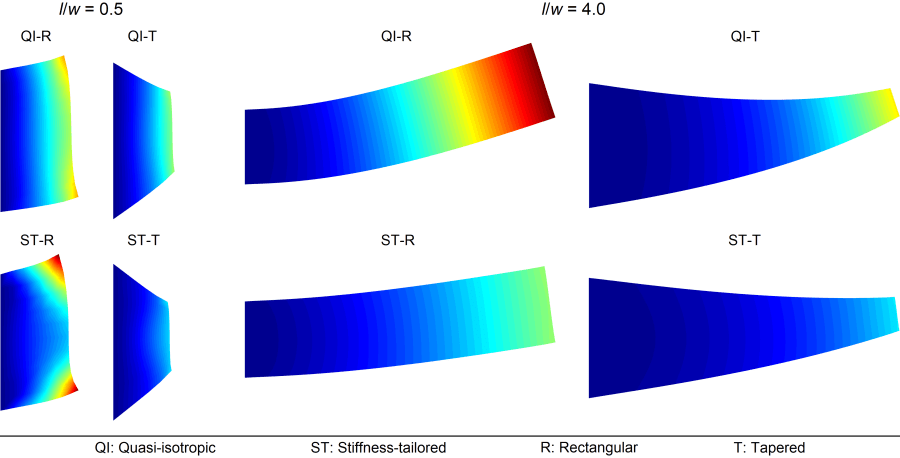
I am glad to share that my article “Concurrent lamination and tapering optimization of cantilever composite plates under shear” has been published in Materials. In this study, I focused on simultaneously optimizing layer and taper angles of cantilever composite laminates under shear. Such an approach fully utilizes stiffness tailoring and geometric design to maximize the operational performance of the structure.
|
|
| Honored to be on shellbuckling.com | 04 January 2021 |
|
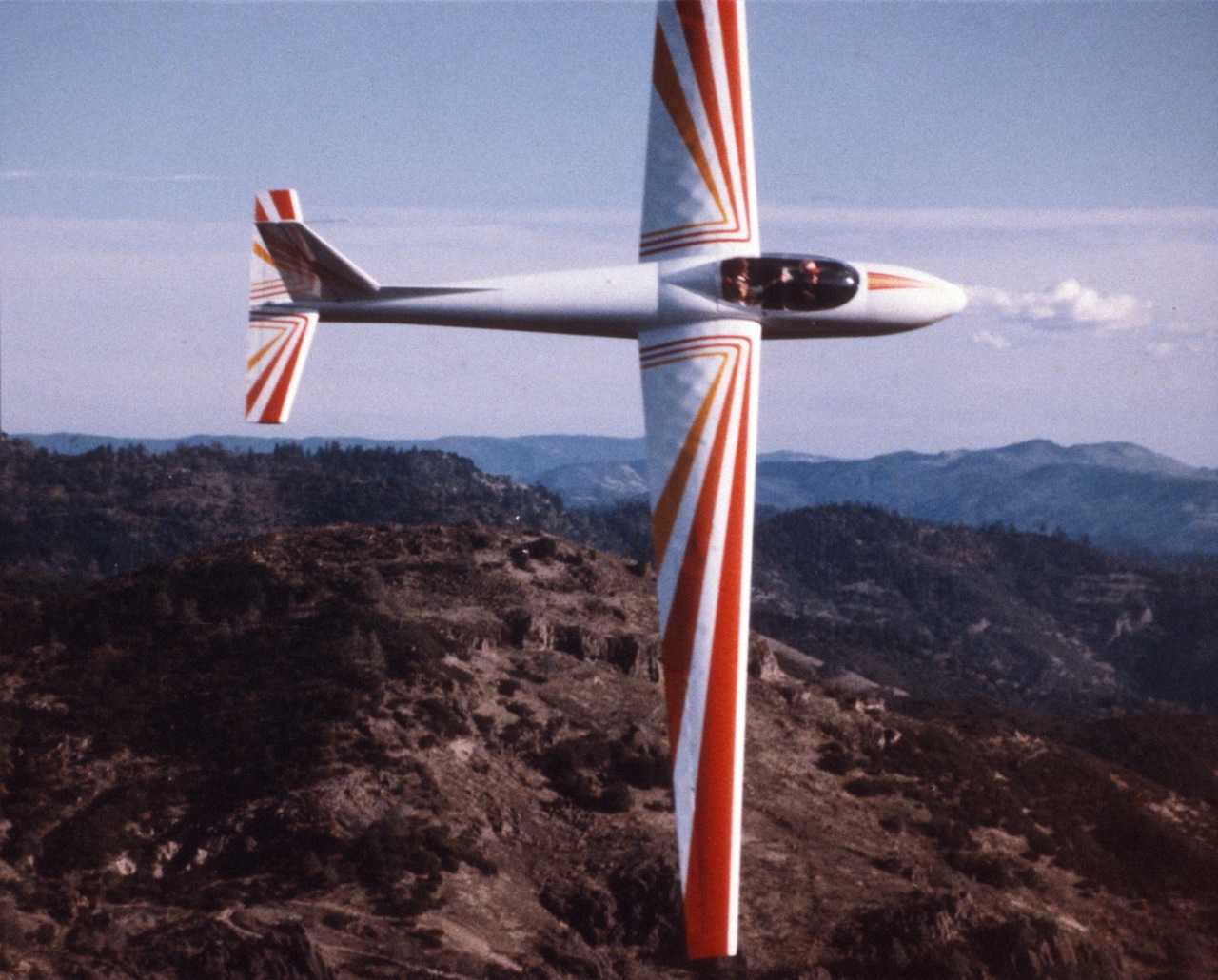
I am proud to share that my profile is now on shellbuckling.com, a website featuring developments regarding buckling of shell structures as well as the people who substantially contributed to the field.
|
|
| Our journal article has been published in Computers & Structures | 15 October 2020 |
|
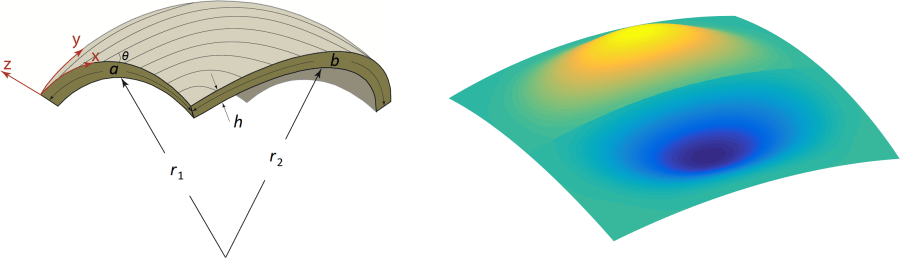
I am happy to share that our article “Dynamic analysis of doubly curved composite panels using lamination parameters and spectral-Tchebychev method” has been published in Computers & Structures. In this paper, we built a modeling framework for the dynamic analysis of doubly curved composite panels. The proposed framework combines the computational efficiency advantages of both lamination parameters formulation and spectral-Tchebychev method. Besides the developed methodology, our novel results give insight on the optimal dynamic design of doubly curved shells.
|
|
| Our ICRA 2020 paper is now online | 15 September 2020 |
|
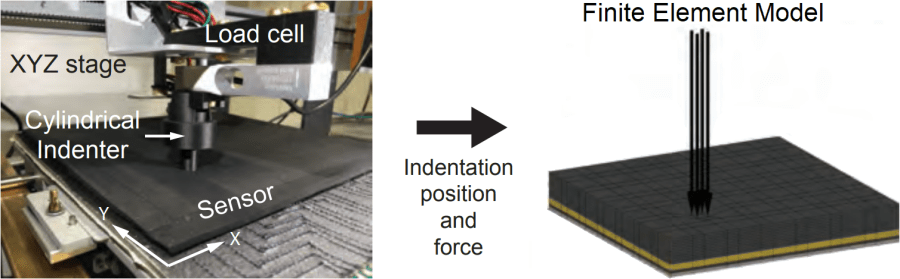
Our paper “Calibrating a Soft ERT-Based Tactile Sensor with a Multiphysics Model and Sim-to-real Transfer Learning” has been published in the proceedings of 2020 IEEE International Conference on Robotics and Automation (ICRA). In this study we introduced a new method for calibrating soft ERT-based tactile sensors using sim-to-real transfer learning with a finite element multiphysics model. The model is composed of three simple models that together map contact pressure distributions to voltage measurements. We optimized the model parameters to reduce the gap between the simulation and reality. Our results show that the developed calibration technique can be utilized for improving the sensing performance of ERT-based tactile sensors.
|
|
| Presented two work-in-progress posters in EuroHaptics 2020 | 10 September 2020 |
|
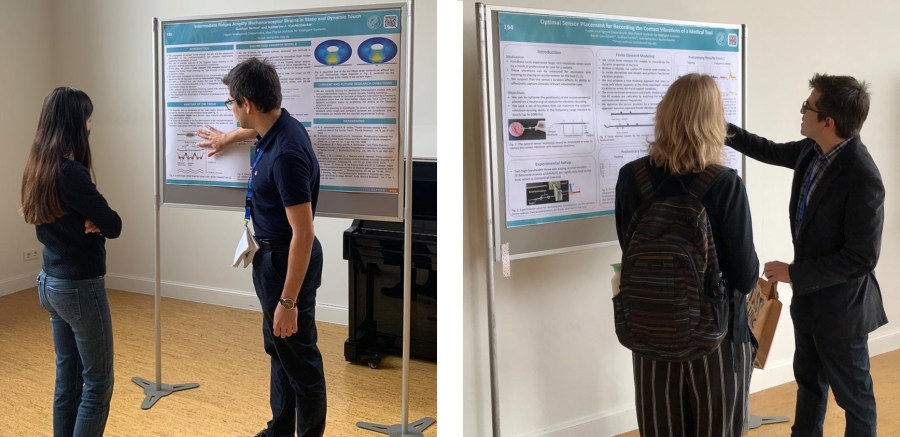
EuroHaptics 2020, the primary European meeting for researchers working on haptic perception and technology, took place on September 6-9, in Leiden, Netherlands. Due to COVID-19 pandemic, the conference organizers hybridized an in-person meeting with a virtual event. I found the opportunity to present two work-in-progress (WIP) posters that contain a part of our research that we have been conducting in the Max Planck Institute for Intelligent Systems. The conference was very succesful as it enabled exchange of ideas between researchers of the field and paved the way for potential collaborations.
|
|
| New journal article has been published in Composite Structures | 27 March 2020 |
|
I am glad to share that our article “Unifying lamination parameters with spectral-Tchebychev method for variable-stiffness composite plate design” has been published in Composite Structures. In this study we developed an effective framework for the analysis and optimization of the variable-stiffness composite plates. We exploited computational advantages of lamination parameter interpolation method and spectral-Tchebyshev technique to obtain a very efficient design tool.
|
|

| A Visit to Fethiye Science High School | 03 March 2020 |
|
Today, Yasemin Vardar and I visited Fethiye Science High School to speak with the students about possible career paths in engineering and science. Impressed by the excellent questions that have been asked, we are convinced that a very bright generation is approaching!
|
|

| Our journal article got published in Materials & Design | 03 June 2019 |
|
I am happy to say that our article “Multi-objective optimization of composite plates using lamination parameters” has been published in Materials & Design. In this study we investigated multi-objective optimization of composite plates using lamination parameters. We aimed to provide insight on the conformity/conflict of multiple performance metrics by determining Pareto-optimal solutions for different problem cases.
|
|

| Presented work-in-progress poster at World Haptics Conference 2019 | 11 July 2019 |
|
I presented our work-in-progress poster entitled “High-Fidelity Multiphysics Finite Element Modeling of Finger-Surface Interactions with Tactile Feedback” at World Haptics Conference 2019 held in Tokyo, Japan. The diversity and quality of the studies demonstrated in the conference were absolutely fantastic!
|
|

 Gokhan Serhat